
Problem Oriented Policing
Contemporary Policing

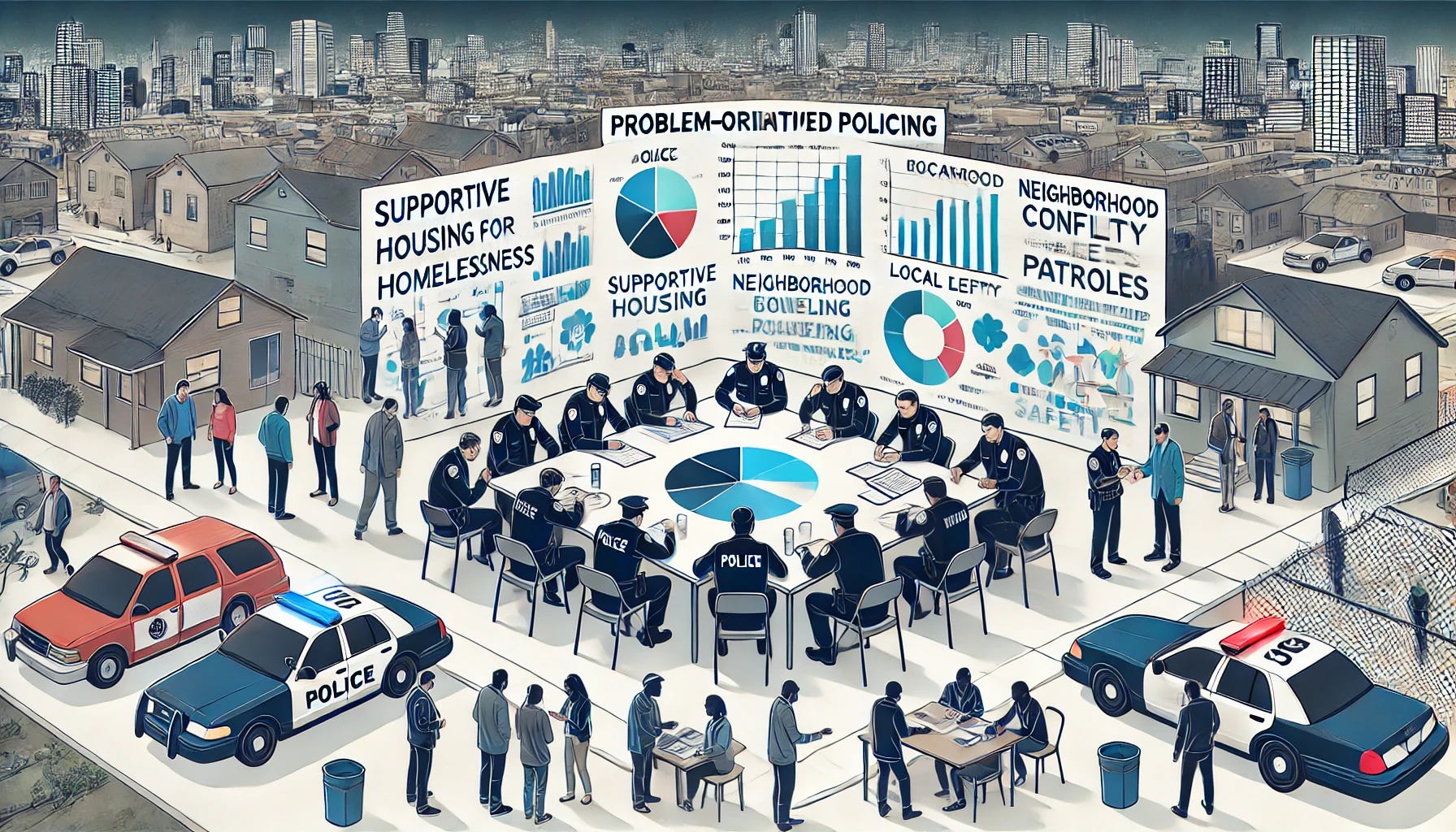
Problem-oriented policing is an approach to law enforcement that focuses on proactively identifying and analyzing specific crime problems or public safety concerns in order to develop effective responses tailored to address their root causes. Rather than merely reacting to individual incidents, this strategy employs a systematic problem identification, analysis, response, and evaluation process—often referred to as the SARA model (Scanning, Analysis, Response, Assessment).
Problem-oriented policing seeks to reduce the occurrence and recurrence of crime, disorder, and public safety issues by pinpointing and addressing underlying factors that contribute to them.
This approach is data-driven and requires the use of evidence, research, and a deep understanding of the community context to identify trends, patterns, and contributing factors. Problem-solving interventions are typically crafted through collaboration with a variety of stakeholders, including community members, other government agencies, and local organizations, ensuring a more comprehensive and sustainable impact.
In contemporary policing, problem-oriented policing plays a crucial role in addressing complex challenges such as drug trafficking, gun violence, gang activity, homelessness, and domestic violence. It has been applied to chronic and emerging problems, requiring law enforcement to think beyond traditional enforcement actions and employ innovative solutions.
For example, instead of repeatedly arresting individuals for minor offenses tied to homelessness, officers may collaborate with social services to provide housing and support, thereby addressing the root cause of the issue.
Problem-oriented policing also reflects a shift toward more strategic and preventive law enforcement, reducing reliance on reactive measures and instead emphasizing long-term, proactive problem-solving. This aligns with the contemporary focus on accountability, efficiency, and building stronger relationships with communities.
By using this approach, police agencies aim to reduce crime, improve community safety, and enhance public trust in law enforcement. This method can adapt to evolving public safety challenges and is particularly relevant in today’s complex social and criminal landscape, where community engagement and innovation are key to effective policing.
2024 © Professor Mike: All rights reserved.